Readiness Guide

Questions worth sitting with before you add another session.

This guide collects the reflection points referenced throughout the curriculum into one place. It is meant to be read slowly, not filled out as a test. None of it is a substitute for guidance from a physician or physical therapist.

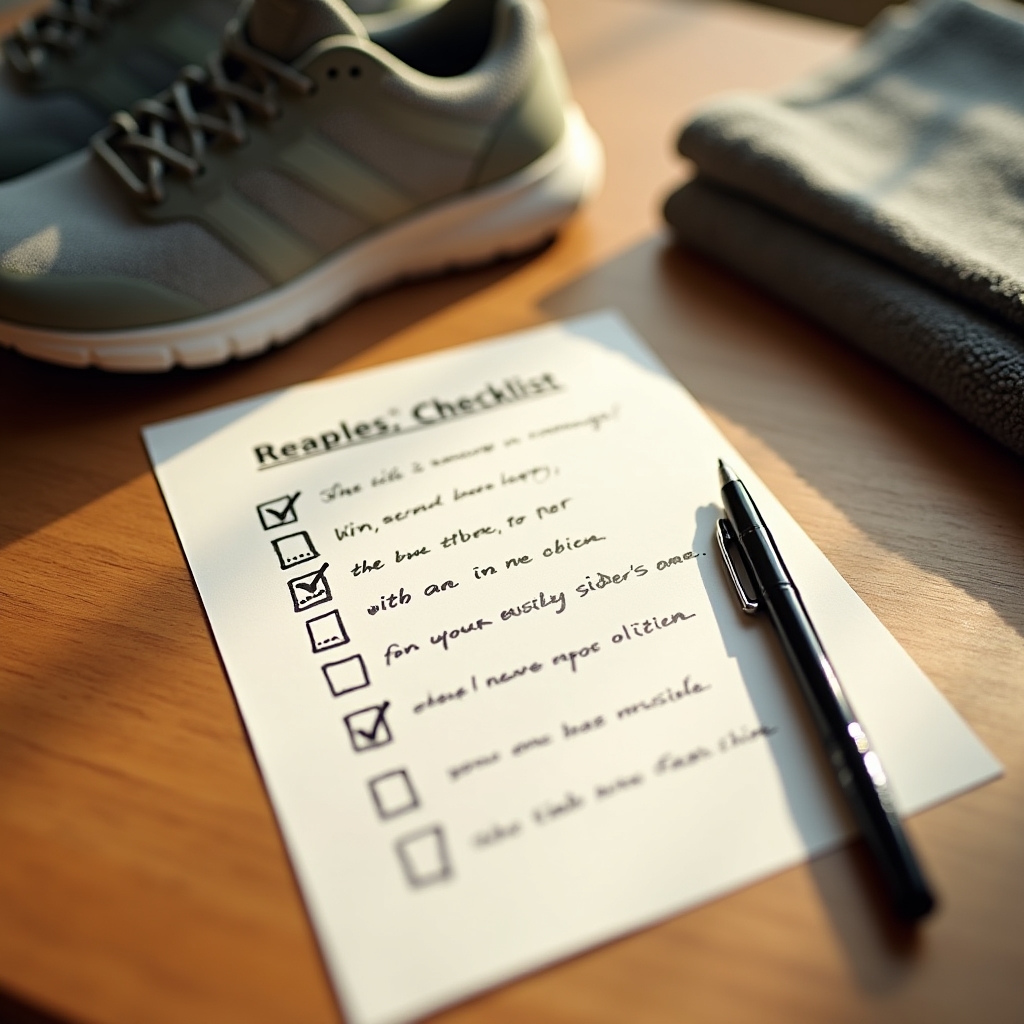
Printed readiness checklist and pen on a table next to a folded workout towel

What "readiness" means in this context

In everyday lifestyle guidance, readiness is not a single measurement. It is more like a pattern noticed across several days: sleep, general energy, mood, and how the body responded to the last stretch of activity. The prompts below are drawn from that broader pattern rather than any single indicator.

They are written as general educational questions. Answering them is a way to build the habit of checking in with yourself before increasing activity, not a formal screening tool.

How has sleep looked over the past several nights?

Educational material on returning to activity often points to sleep as one of the more consistent influences on how a body handles added effort. Noticing a pattern of poor sleep is generally treated as a reason to keep a week lighter rather than heavier.

Did the last session leave lingering fatigue, or did it fade quickly?

A useful distinction discussed in the awareness modules is between tiredness that clears within a day and a heavier, ongoing fatigue that carries into the next session.

Is there any localized pain, as opposed to general muscle soreness?

General lifestyle guidance commonly separates broad, symmetrical soreness from sharper, one-sided, or joint-specific pain, with the latter typically flagged as worth discussing with a healthcare provider.

How does motivation feel this week compared to last week?

A noticeable drop in motivation is sometimes discussed as an early signal worth paying attention to, alongside physical fatigue, rather than something to push through automatically.

Has stress outside of activity, like work or family demands, shifted recently?

Because the body does not fully separate physical and mental stress, the progression modules mention outside stress as a reasonable factor to weigh alongside physical signals.

This page is provided for general educational purposes only. It does not diagnose any condition, does not replace professional medical evaluation, and should not be used as the sole basis for decisions about returning to activity after an injury or medical event.